
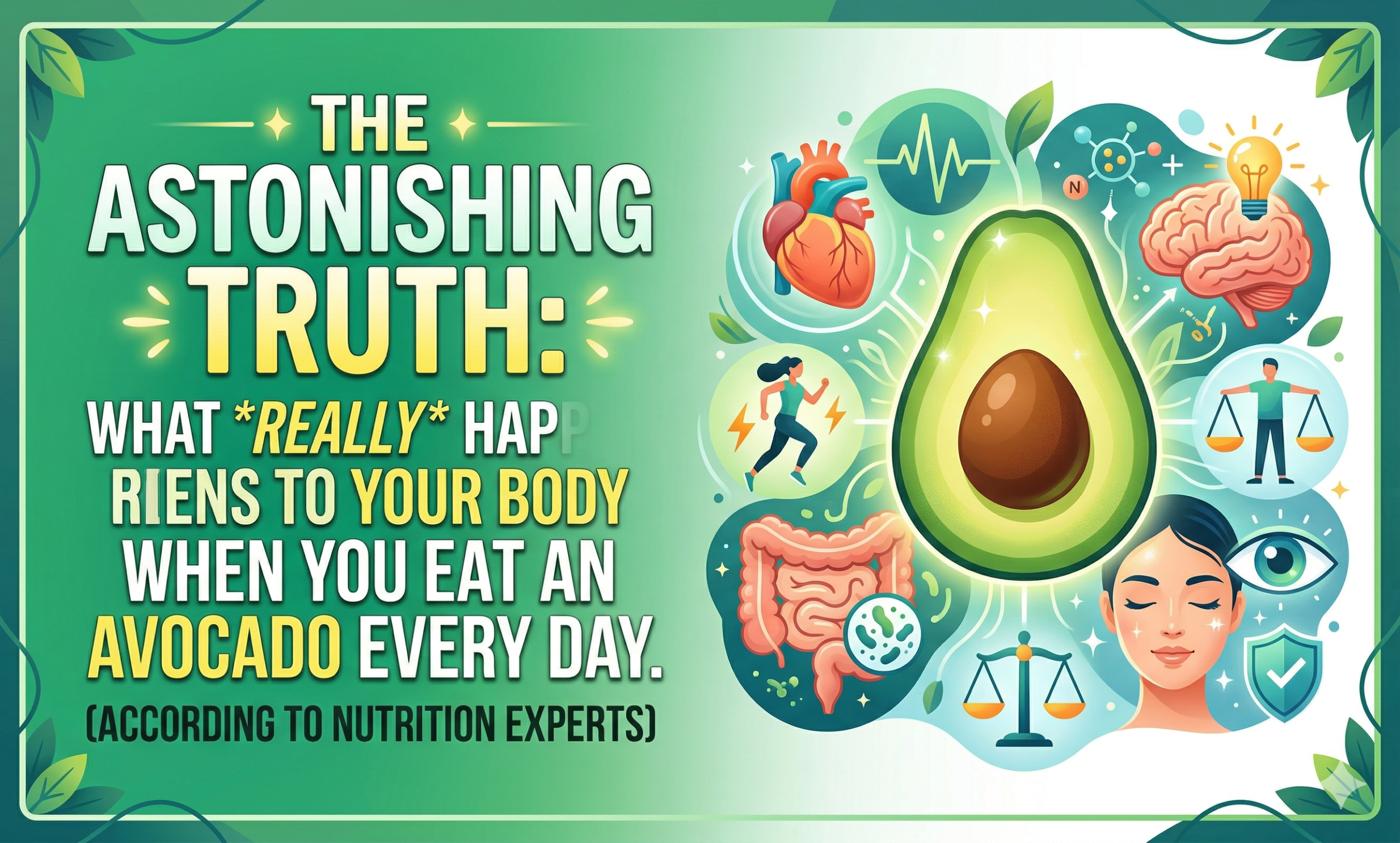
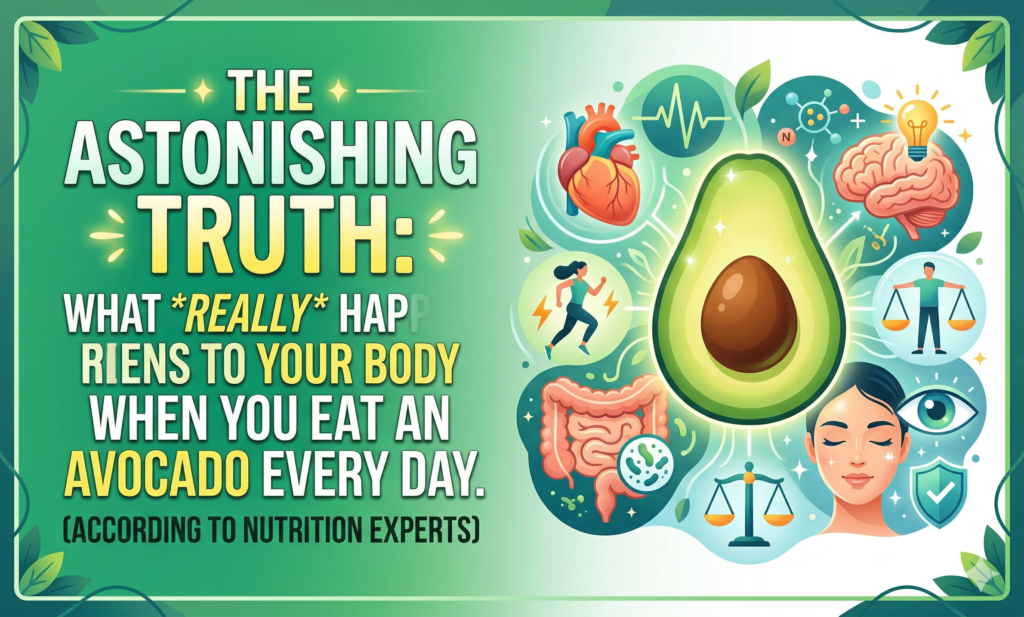
The Daily Avocado Habit: Avocados have evolved from a simple garnish into a staple of the modern wellness movement. Whether smashed on sourdough or blended into a morning protein shake, this vibrant green fruit is prized for its rich texture and flavor. But what is actually going on beneath the surface? If you commit to eating an avocado every single day, how does your body react?
Dietitians and clinical nutritionists have spent years analyzing Persea americana. The scientific consensus is clear: incorporating avocados into your daily diet triggers a cascade of positive effects throughout your body, provided you keep an eye on portion sizes.

If you are thinking about making avocados a daily dietary staple, here is a detailed breakdown of how they influence your heart, digestion, brain function, outward appearance, and waistline.
The Nutritional Blueprint of an Avocado
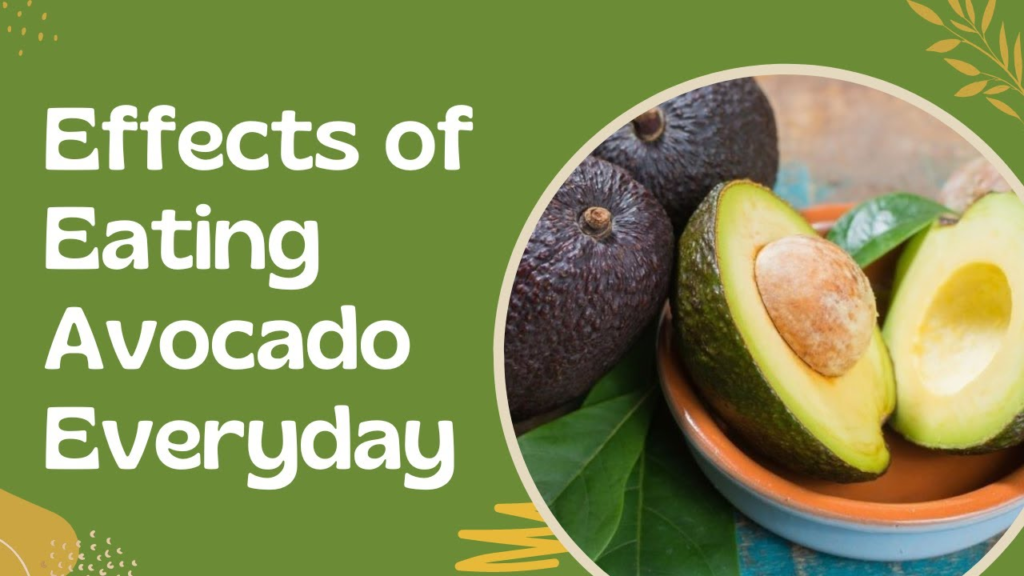
To understand the bodily benefits, we first have to look at what makes an avocado so unique. Unlike apples or oranges, which are carbohydrate-heavy, avocados are packed with healthy dietary fats.
A standard serving (roughly 50 grams, or a third of a medium-sized avocado) delivers a potent mix of nearly 20 essential vitamins and minerals. If you consume a whole medium avocado, you are taking in approximately:
- Calories: 240–250
- Healthy Fats: 22 grams (predominantly monounsaturated)
- Dietary Fiber: 10 grams
- Potassium: 15% of your Daily Value (DV)
- Folate: 20% of your DV
- Vitamin K: 26% of your DV
- Vitamin E: 10% of your DV

This heavy-hitting nutritional profile acts as the foundation for the systemic health upgrades your body experiences.
Shielding Your Cardiovascular System
Heart disease is a leading global health concern, making the cardiovascular benefits of avocados one of their most valuable assets.
Balancing Cholesterol Levels

The star player in an avocado’s fat profile is oleic acid—the exact same monounsaturated fat that makes olive oil so healthy. Research consistently shows that a diet high in oleic acid helps calm bodily inflammation. More specifically, eating avocados can significantly drive down levels of LDL (the “bad” cholesterol) and blood triglycerides, while simultaneously boosting HDL (the “good” cholesterol).
Natural Blood Pressure Control

Bananas usually get all the credit for potassium, but ounce-for-ounce, avocados contain significantly more of this vital mineral. Potassium acts as a natural vasodilator, meaning it helps relax the tension in your blood vessel walls. This simple mechanism lowers your overall blood pressure, taking stress off your heart and reducing the risk of strokes.
Digestive Wellness and Microbiome Support
Your gut is often referred to as your “second brain,” influencing your immune defenses and even your mood. Eating an avocado is one of the easiest daily habits to support your digestive tract.
A Dual-Fiber Approach
A whole avocado provides around 10 grams of dietary fiber, making a massive dent in your daily requirements. It offers a perfect split of two essential types:
- Insoluble Fiber (about 75%): This acts like a broom for your digestive tract, adding bulk and keeping waste moving smoothly to prevent constipation.
- Soluble Fiber (about 25%): This forms a gel-like consistency in your gut, slowing digestion to stabilize blood sugar and providing food for beneficial gut flora.
Feeding Good Bacteria

Science shows that regular avocado eaters have a richer, more diverse gut microbiome. The fibers in the fruit are fermented by gut bacteria to produce short-chain fatty acids (SCFAs), such as butyrate. These SCFAs are crucial for keeping the intestinal lining healthy and preventing chronic gut inflammation.
Weight Control: Utilizing Fat to Stay Lean
It might feel backward to eat a high-fat, high-calorie food to manage your weight, but the metabolic benefits of avocados are undeniable.
Crushing Cravings Through Satiety
The dense combination of plant-based fats and heavy fiber makes avocados incredibly filling. Fats slow gastric emptying, while fiber expands in your stomach. This one-two punch sends a strong “I’m full” signal to your brain. Studies indicate that adding avocado to a meal keeps individuals satisfied for hours longer, effectively naturally curbing the urge to snack on empty calories later in the day.
Steadying Blood Glucose
Refined carbs cause erratic spikes and crashes in blood sugar, which inevitably leads to fat storage and fatigue. Avocados, however, have virtually no impact on blood glucose. Pairing an avocado with carbohydrates slows down sugar absorption, preventing the harsh insulin spikes that disrupt metabolic health.
Upgrading Brain Function and Focus
Your brain requires high-quality fats to operate smoothly, considering it is composed of nearly 60% fat itself.
Circulation and Cognitive Speed
Because avocados improve cardiovascular health, they naturally improve cerebral blood flow. When your brain receives a steady, unimpeded flow of oxygen-rich blood, you experience better focus and mental stamina.
The Lutein Advantage
Avocados contain a highly absorbable form of lutein, a powerful antioxidant. While famous for protecting eyes, lutein also crosses over into the brain. Research has linked higher lutein levels to enhanced memory retention, quicker problem-solving abilities, and a slower rate of cognitive decline as we age.
Natural Defense for Skin and Eyes
For aesthetic and sensory health, daily avocado consumption acts as an internal protective shield.
Fighting Premature Aging
Your skin relies on vitamins to stay vibrant. Avocados supply a healthy dose of Vitamin C, which is mandatory for collagen production (the protein that keeps skin plump and firm). Furthermore, the Vitamin E in avocados acts as a shield against oxidative stress from UV rays and pollution, helping to fend off wrinkles and skin dryness.
Filtering Harmful Light
The antioxidants lutein and zeaxanthin found in avocados naturally accumulate in the retina of your eyes. They act almost like internal sunglasses, filtering out damaging blue light and drastically lowering your risk of developing age-related macular degeneration and cataracts.
Are There Any Reasons to Limit Avocado Intake?
Despite the glowing health resume, nutritionists do warn that you cannot eat an unlimited amount of avocados without a few potential side effects.
Keeping Calories in Check
Avocados are undeniably calorie-dense. A large one can easily top 300 calories. If you are actively trying to lose weight by maintaining a calorie deficit, you have to track this intake carefully. A standard, healthy daily portion for most people is about one-third to one-half of the fruit.
The Latex-Fruit Connection
Some people experience a cross-reactive allergy known as latex-fruit syndrome. Because the proteins in an avocado mimic those found in natural rubber latex, people with latex allergies might experience itchy mouths, stomach cramps, or hives when eating the fruit.
IBS Triggers (FODMAPs)
If you suffer from Irritable Bowel Syndrome (IBS), large amounts of avocado might cause distress. They contain a specific polyol (sorbitol) that is classified as a FODMAP. Eating too much of it can trigger gas and painful bloating in sensitive digestive systems.

The Bottom Line on Daily Avocados
Ultimately, what happens when you eat an avocado every day? Your cardiovascular system strengthens, your gut microbiome flourishes, your skin remains resilient, and your brain stays sharp.
Provided you manage your overall daily calories and don’t suffer from specific allergies or sensitivities, eating an avocado is one of the smartest, most delicious daily habits you can adopt for long-term health.
Final Thoughts
Eating avocado every day can have a wide range of positive effects on your body. From improving heart health and digestion to enhancing skin, brain function, and immunity, this nutrient-dense fruit offers impressive health benefits.
However, balance is key. Consuming moderate portions while maintaining a well-rounded diet will help you reap the full benefits without excess calorie intake.
With its creamy texture, versatile flavor, and powerful nutritional profile, avocado truly earns its reputation as one of nature’s most valuable superfoods.
Adding even half an avocado to your daily meals can be a simple yet powerful step toward better health.
FAQs
1. Are avocados good for heart health?
Yes, avocados are beneficial for heart health. They contain monounsaturated fats that help reduce bad cholesterol (LDL) and increase good cholesterol (HDL), which can lower the risk of heart disease.
2. Do avocados improve digestion?
Avocados are high in dietary fiber, which supports healthy digestion. Fiber helps regulate bowel movements, supports gut bacteria, and reduces the risk of constipation.
3. Can eating avocado improve skin health?
Yes, avocados contain vitamins C and E along with healthy fats that support skin hydration and collagen production. These nutrients may help keep the skin healthy, smooth, and radiant.