
Introduction
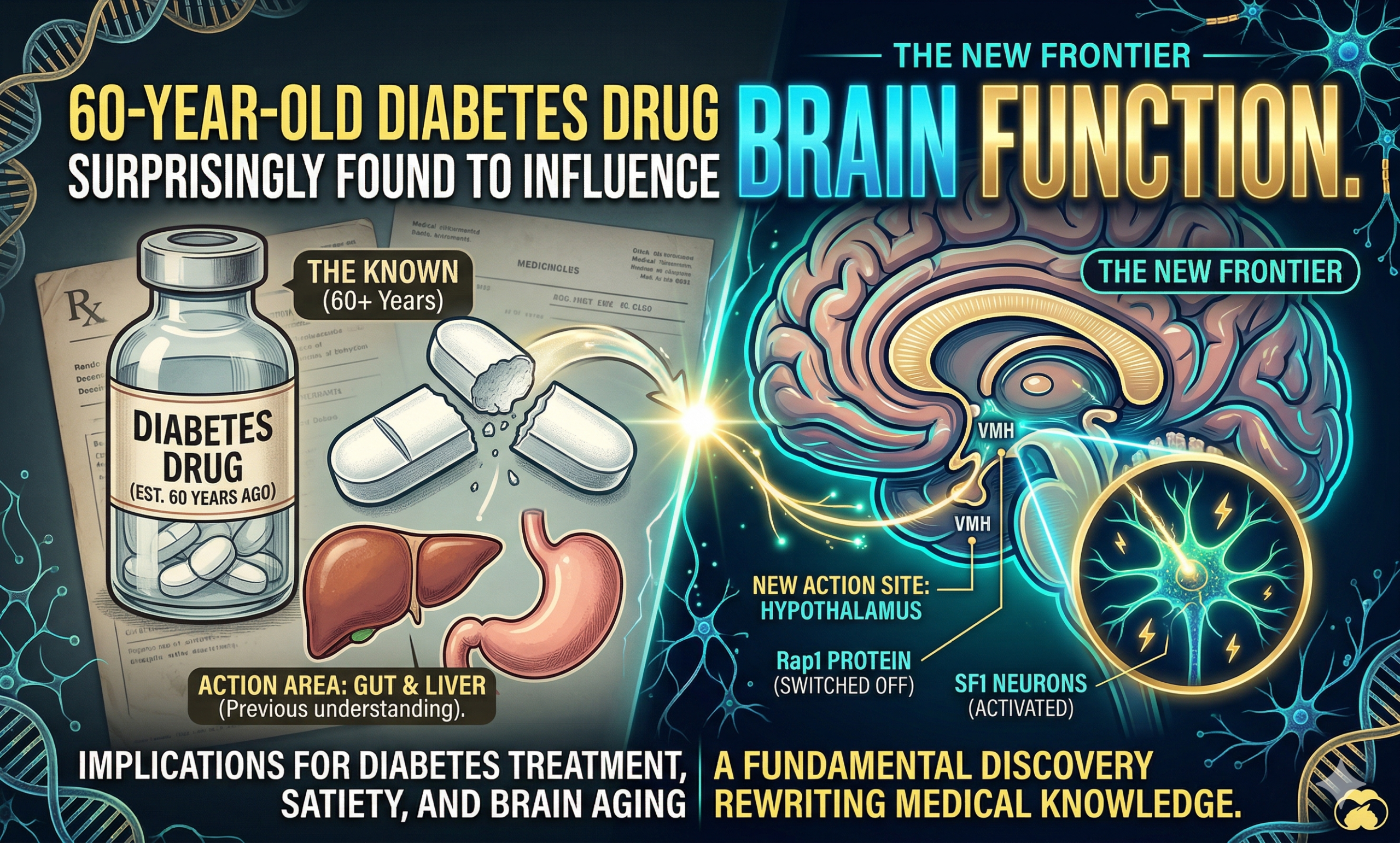
60-Year-Old Diabetes Drug: For more than six decades, a well-known medication has been widely used to treat people with type 2 diabetes. Doctors around the world have relied on this drug to help patients control their blood sugar levels and reduce the risk of serious health complications.
Recently, however, scientists have made an unexpected discovery. New research suggests that this long-established diabetes treatment may also affect the brain in ways researchers did not anticipate.

Early studies indicate that the medication may interact with brain cells and metabolic processes that influence memory, cognitive ability, and neurological health. This surprising finding has attracted the attention of researchers because it may open the door to potential treatments for several brain-related conditions.
As scientists continue studying this discovery, it could reshape how researchers view the connection between metabolic health and brain function.
The Long History of a Trusted Diabetes Medication
A Major Breakthrough in Diabetes Treatment
When the drug was first introduced decades ago, it represented a major advancement in the management of type 2 diabetes. The medication helps regulate blood sugar levels by improving the body’s response to insulin and reducing glucose production in the liver.


Because of its effectiveness and strong safety record, the drug quickly became one of the most commonly prescribed treatments for diabetes worldwide.
Millions of individuals now rely on it as part of their daily routine to manage their condition and avoid serious complications.
Decades of Safe and Reliable Use
Over the years, this diabetes medication has been extensively studied. Numerous clinical trials have confirmed its ability to control blood sugar safely and effectively.

Even though the drug has been used for more than half a century, scientists are still discovering new ways it interacts with the body. The latest research indicates that its influence may extend beyond metabolic health and into the functioning of the brain.
Unexpected Brain Effects Discovered by Researchers
A Surprising Scientific Observation

The discovery began when scientists noticed unusual patterns while studying the drug’s broader metabolic effects. Some patients taking the medication appeared to show changes in brain activity and cognitive performance.
This observation sparked interest among researchers, prompting them to investigate whether the drug could directly influence neurological processes.
How the Medication May Interact With Brain Cells
Initial research suggests that the drug affects biological pathways related to energy regulation, inflammation control, and cellular maintenance.
These pathways are essential not only for metabolic health but also for maintaining healthy brain function.
By improving the body’s ability to regulate energy and reduce inflammation, the medication may also help brain cells operate more efficiently.
Possible Benefits for Brain Health
Potential Improvements in Cognitive Function
One of the most intriguing possibilities is that the medication could support cognitive performance.
Some early studies indicate that people taking the drug may experience improvements in memory, mental clarity, and learning ability.
Although these findings are still being investigated, they suggest the drug could influence important neurological processes related to thinking and memory.
Potential Impact on Neurodegenerative Diseases
Researchers are also exploring whether the drug could help slow or prevent certain neurological conditions associated with aging.
Some laboratory studies indicate that the medication may protect brain cells from damage caused by oxidative stress and inflammation.

If these protective effects are confirmed in future research, the drug could potentially contribute to treatments for neurological disorders.
Reduced Inflammation in the Brain
Chronic inflammation in the brain is believed to play a role in many neurological diseases.
Scientists have observed that the diabetes medication may reduce inflammatory signals within the body, which could also help protect brain tissue.
Lower inflammation levels may help maintain healthy communication between brain cells and support long-term neurological health.
Understanding the Science Behind the Discovery
The Connection Between Metabolism and Brain Function
The brain requires a significant amount of energy to perform its functions. Most of this energy comes from glucose metabolism.
When metabolic processes become inefficient, brain cells may struggle to maintain normal activity.
Since the diabetes medication improves metabolic regulation, researchers believe it could also help the brain use energy more effectively.
Cellular Pathways That Support Brain Health
Scientists suspect that the drug activates certain biological pathways responsible for maintaining cellular health.
These pathways help cells repair damage, remove harmful molecules, and maintain stable energy production.
By supporting these protective systems, the medication may indirectly help preserve brain function.
What This Discovery Means for Future Medicine

Repurposing Existing Drugs
One of the most exciting aspects of this discovery is the possibility of using an existing medication for additional medical purposes.
Developing new drugs from scratch can take many years. However, medications that are already approved for human use can sometimes be studied for new applications more quickly.
Because this diabetes drug already has a well-established safety profile, researchers may be able to explore its neurological benefits faster than developing entirely new treatments.
Expanding Options for Brain Disorder Treatments
Neurological diseases are among the most challenging conditions to treat.
If the diabetes medication proves beneficial for brain health, it could eventually become part of new treatment strategies for cognitive decline and neurodegenerative diseases.
This discovery could also encourage scientists to investigate other metabolic medications for potential neurological benefits.
Ongoing Scientific Studies
Clinical Trials and Research Projects
Researchers across the world are currently studying how this diabetes medication affects the brain.
Clinical trials are examining factors such as cognitive performance, brain imaging results, and biological markers associated with brain health.
These studies aim to determine whether the drug truly provides neurological benefits and how strong those effects might be.
Early Findings Show Encouraging Signs
Preliminary research has produced promising results. Some studies have reported improved cognitive markers in patients who take the medication regularly.
However, scientists emphasize that more research is required before firm conclusions can be made.
Large-scale studies will be necessary to confirm these early findings.
Remaining Questions Scientists Are Trying to Answer
Determining the Exact Biological Mechanism
Although researchers have observed potential brain-related effects, the precise mechanisms responsible for these changes are not yet fully understood.
The brain is extremely complex, and multiple biological systems may contribute to the drug’s influence on neurological processes.
Scientists are continuing laboratory and clinical research to better understand how these effects occur.
Long-Term Impact on Brain Health
Another important question is whether the drug’s potential neurological benefits remain consistent over long periods of time.
Long-term studies will help determine whether the medication can slow age-related cognitive decline or help protect against neurological diseases.
What This Means for Patients
Benefits for People With Diabetes
For individuals already using the medication to manage diabetes, this discovery could represent an additional health advantage.
However, experts emphasize that patients should only take the medication as prescribed by healthcare professionals.
It should not be used specifically for brain health until more research confirms its effectiveness.
A New Perspective on Preventive Health
If future studies confirm the drug’s benefits for brain function, it could become part of strategies aimed at protecting cognitive health as people age.
The discovery also highlights how interconnected different systems within the body truly are.
Treatments designed for metabolic conditions may also influence neurological health in unexpected ways.
The Growing Link Between Metabolic and Brain Health
Why Researchers Are Exploring This Relationship
Scientists have increasingly recognized that metabolic health plays an important role in brain function.
Conditions such as diabetes, obesity, and metabolic syndrome have been linked to an increased risk of cognitive decline.
Because metabolism affects how cells generate and use energy, improving metabolic efficiency may help support brain function as well.
Potential for Future Discoveries
The surprising discovery involving this diabetes medication may encourage researchers to examine other existing drugs for unexpected neurological effects.
This approach could lead to innovative treatments that address both metabolic health and brain health simultaneously.
Conclusion
The discovery that a diabetes medication used for more than 60 years may influence brain function represents an exciting development in medical research.
Originally designed to control blood sugar levels, the drug may also play a role in supporting cognitive health and protecting brain cells.
Although scientists are still studying the extent of these effects, early findings suggest that improving metabolic processes could have far-reaching benefits beyond diabetes management.
As research continues, this long-standing medication may help unlock new possibilities in the treatment of neurological disorders and age-related cognitive decline.
Sometimes the most surprising scientific breakthroughs come not from new inventions, but from discovering hidden potential in treatments that have been used for decades.
FAQs
1. What is the diabetes drug that may affect the brain?
Scientists have been studying Metformin, a widely prescribed drug used to manage Type 2 Diabetes. Recent studies suggest that it may also influence brain metabolism and cognitive functions.
2. How can a diabetes medication impact brain health?
The brain depends heavily on glucose for energy. Because Metformin improves the body’s ability to regulate glucose and metabolic processes, it may indirectly support brain cells and improve energy use within the brain.
3. Can metformin improve memory or cognitive function?
Some early research indicates that Metformin may support memory and cognitive performance by reducing inflammation and improving cellular energy production. However, more clinical studies are needed to confirm these effects.