Introduction
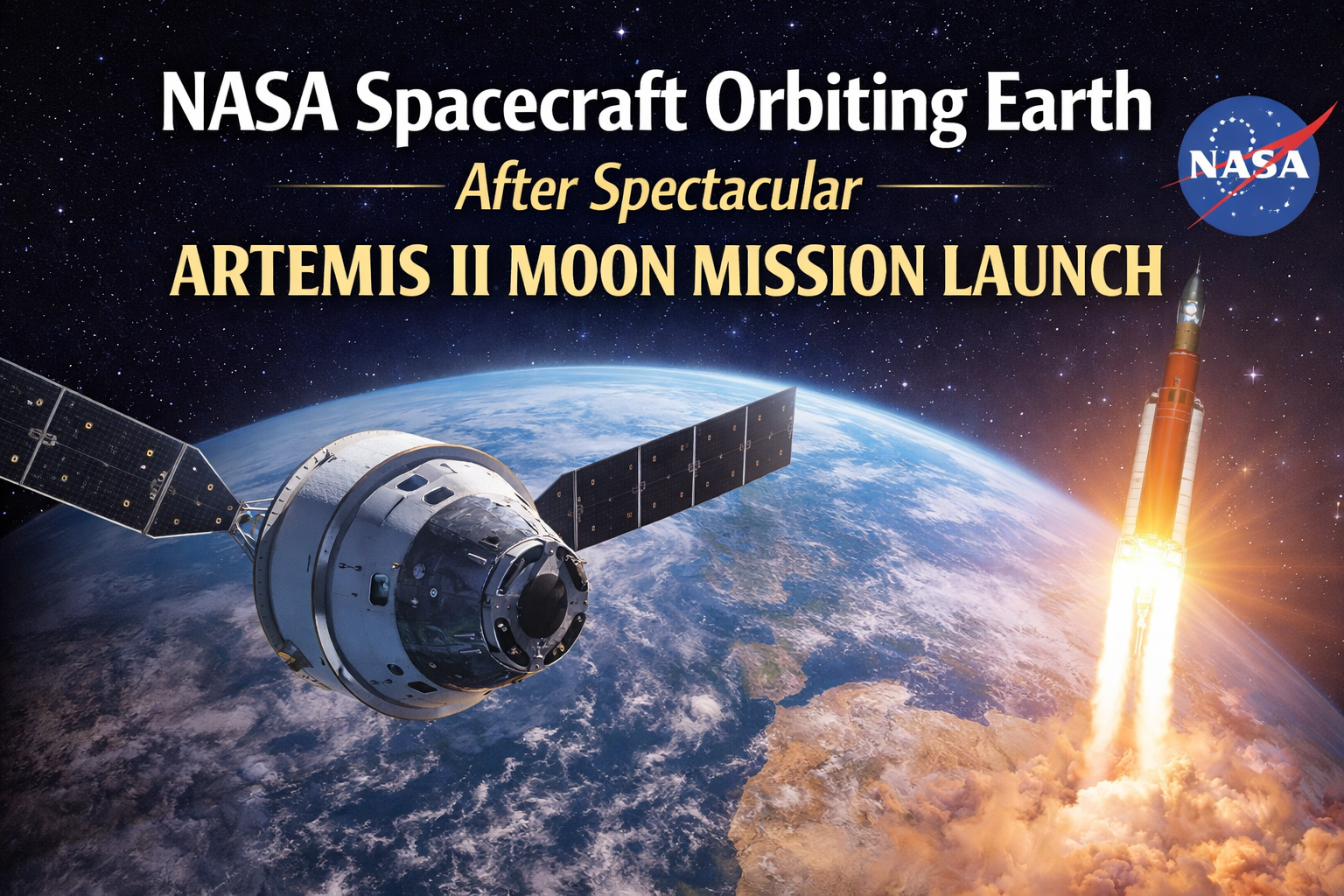
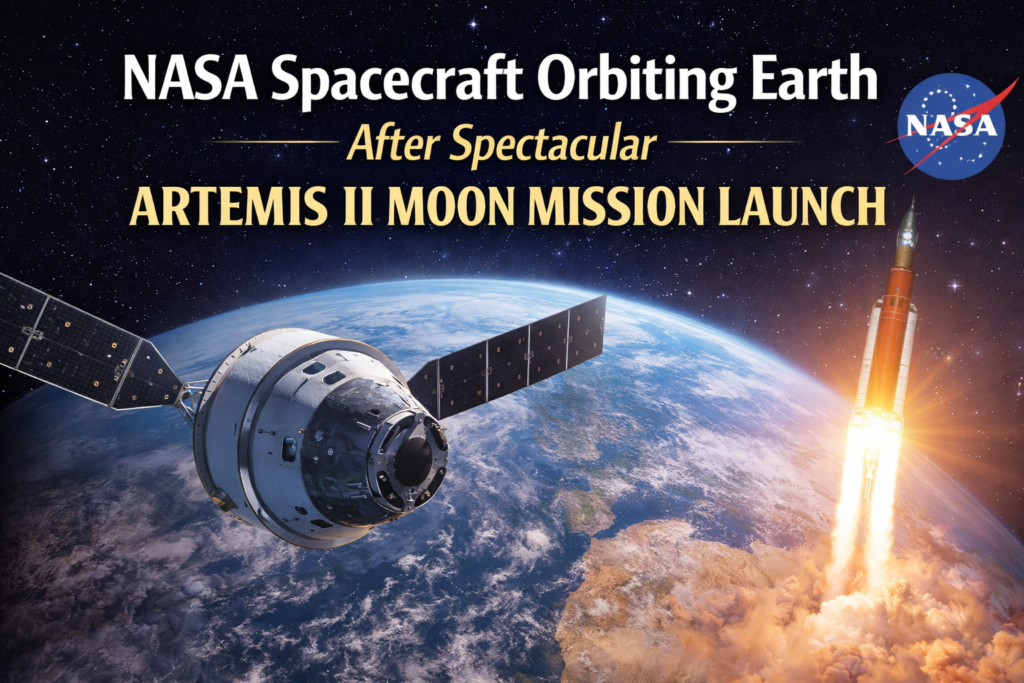
NASA Spacecraft Orbiting Earth: A major milestone in human space exploration has unfolded as a spacecraft from NASA successfully entered orbit around Earth following the dramatic launch of the Artemis II mission. This historic mission marks a critical step toward returning humans to the Moon and eventually sending astronauts to Mars.
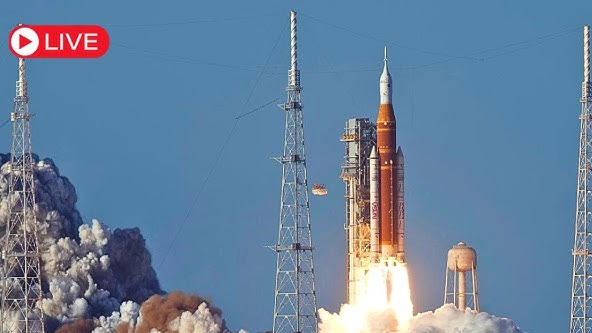
The launch captured global attention as engineers, scientists, and space enthusiasts watched the powerful rocket lift the spacecraft into space. After separating from its launch vehicle, the spacecraft entered a stable orbit around Earth, completing one of the most crucial phases of the mission.

The success of this operation demonstrates the growing capabilities of modern space technology and highlights the renewed commitment to deep space exploration. The Artemis program represents one of the most ambitious efforts in spaceflight since the era of the Apollo missions.
Understanding the Artemis Program
Humanity’s Next Giant Leap in Space Exploration
The Artemis program led by NASA aims to establish a sustainable human presence on the Moon and prepare for future missions to Mars. The program builds upon decades of spaceflight experience gained from earlier missions, including the historic Apollo 11 Moon landing.
The Artemis initiative includes multiple missions designed to test new spacecraft, explore the lunar environment, and build infrastructure that will support long-term exploration.

Key goals of the program include:
- Returning astronauts to the Moon
- Establishing a sustainable lunar base
- Advancing deep space technology
- Preparing for future human missions to Mars
The Role of Artemis II in the Moon Exploration Plan
A Critical Step Toward Human Lunar Missions
The Artemis II mission plays a crucial role in the broader Artemis program. Unlike the earlier Artemis I mission, which was uncrewed, Artemis II is designed to test systems that will support astronauts on future lunar missions.
This mission focuses on verifying the performance of spacecraft systems, navigation technologies, communication equipment, and life-support capabilities.

Engineers carefully monitor the spacecraft during its orbit around Earth to ensure all systems function as expected before it continues toward the Moon.
The Launch That Captured the World’s Attention
A Spectacular Liftoff From Kennedy Space Center
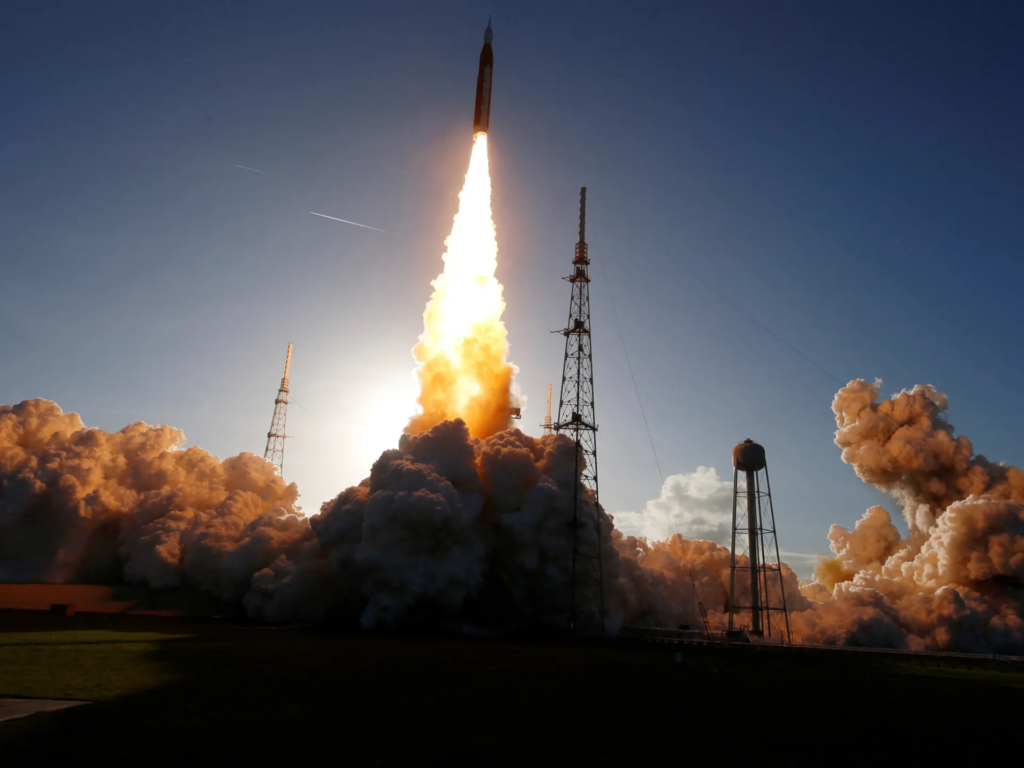
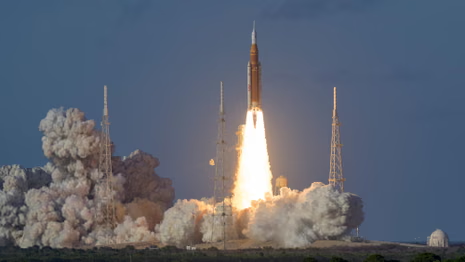
The powerful rocket carrying the Artemis II spacecraft launched from Kennedy Space Center. Spectators gathered along Florida’s coastline while millions more watched the launch through live broadcasts.
The launch vehicle used for the mission was the massive Space Launch System, the most powerful rocket ever built by NASA.
Moments after ignition, the rocket’s engines generated millions of pounds of thrust, lifting the spacecraft into the sky and beginning its journey beyond Earth’s atmosphere.
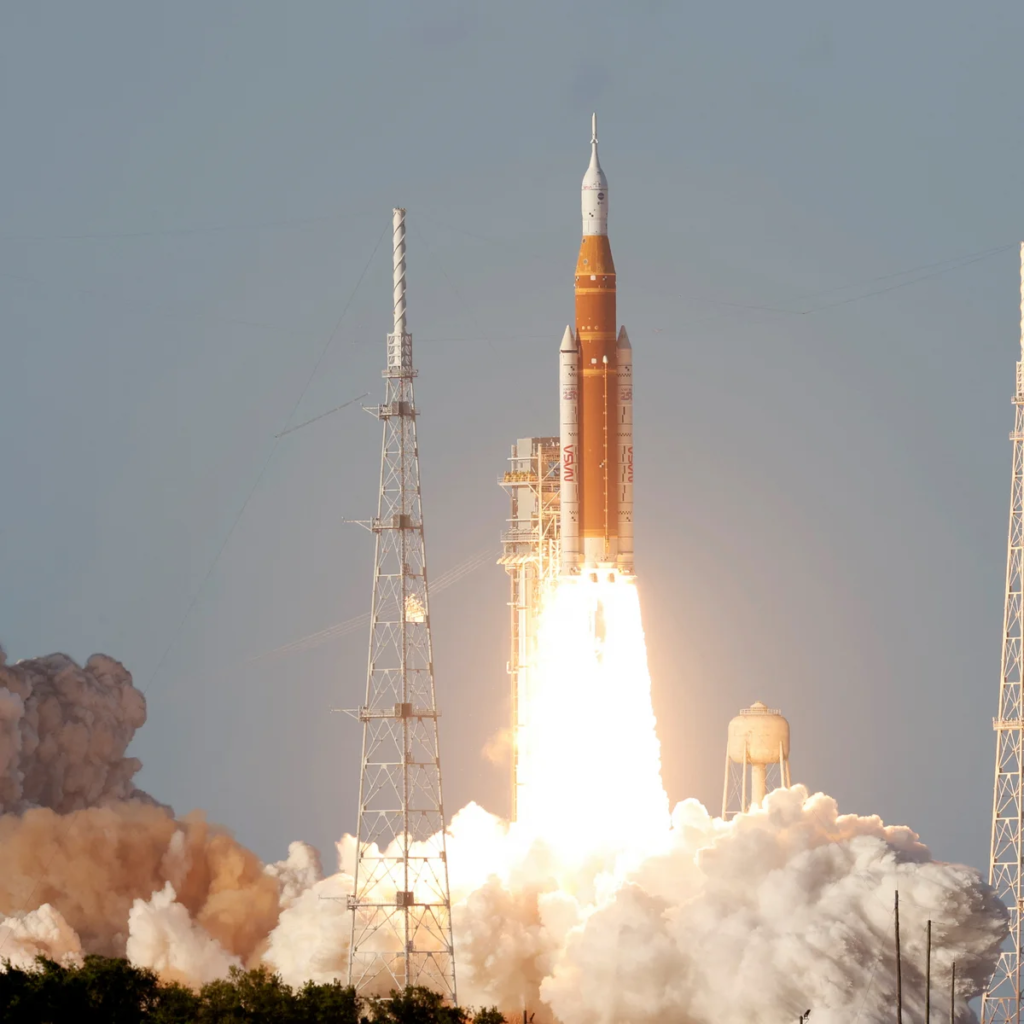
Within minutes, the rocket reached orbital velocity, allowing the spacecraft to separate and begin its mission.
The Orion Spacecraft: Designed for Deep Space
The Vehicle Carrying Humanity’s Lunar Ambitions
The spacecraft orbiting Earth after launch is the Orion capsule, designed to carry astronauts safely through deep space missions.
Orion represents one of the most advanced spacecraft ever developed. It features modern technology designed to support human life during long-duration missions beyond Earth orbit.
Key features of the Orion spacecraft include:
- advanced life-support systems
- radiation protection technology
- automated navigation capabilities
- high-speed reentry heat shield
These systems allow the spacecraft to travel safely to the Moon and back.
Why the Spacecraft Orbits Earth First
Testing Systems Before Traveling to the Moon
One of the most important stages of the Artemis II mission is the initial orbit around Earth.
This phase allows engineers at NASA to evaluate spacecraft systems in real space conditions before continuing the mission.
During this period, engineers monitor:
- spacecraft stability
- communication signals
- navigation systems
- propulsion performance
- environmental controls
If any issues arise, mission controllers can respond while the spacecraft remains relatively close to Earth.
The Technology Behind the Mission
Advanced Engineering for Deep Space Travel
The Artemis missions incorporate cutting-edge technology designed to support future space exploration.
One major component is the Space Launch System, which delivers the Orion spacecraft into space.
The rocket produces more thrust than any previous NASA rocket, enabling it to carry heavier payloads and travel farther than earlier spacecraft.
The mission also relies on sophisticated onboard computers capable of autonomously managing many spacecraft functions.
Preparing for the Return of Astronauts to the Moon
Building Toward Artemis III
The success of Artemis II is essential for the next phase of the Artemis program.
The future mission, Artemis III, aims to land astronauts on the Moon for the first time since the Apollo era.
NASA plans to send astronauts to the lunar south pole, a region believed to contain frozen water within permanently shadowed craters.
This water could support long-term lunar exploration by providing drinking water, oxygen, and even rocket fuel.
Why the Moon Matters for Future Space Exploration
A Gateway to Mars
The Moon plays a crucial role in humanity’s future in space.
By establishing a presence on the Moon, space agencies can develop the technologies and experience needed for longer missions to destinations such as Mars.
The Moon provides an ideal testing ground because it is relatively close to Earth while still offering the challenges of deep space environments.
International Collaboration in the Artemis Program
A Global Effort in Space Exploration
The Artemis program involves cooperation between multiple international partners.
Organizations participating in the program include:
- European Space Agency
- Canadian Space Agency
- Japan Aerospace Exploration Agency
These partnerships allow countries to share resources, technology, and scientific expertise.
The collaboration also strengthens diplomatic relationships and encourages peaceful exploration of space.
The Future Lunar Gateway Space Station
A New Space Station Orbiting the Moon
One major component of the Artemis program is the planned Lunar Gateway.
This small space station will orbit the Moon and serve as a staging point for missions to the lunar surface.
Astronauts will be able to live and work on the station while preparing for lunar landings.
The Lunar Gateway will also support scientific research and technology testing.
Scientific Discoveries Expected From Artemis Missions
The Artemis program will enable scientists to study the Moon in greater detail than ever before.
Potential research areas include:
- lunar geology
- water ice deposits
- radiation effects in deep space
- space resource utilization
Understanding these factors will help scientists plan future missions deeper into the solar system.
Public Excitement Around the Artemis Launch
The launch of Artemis II sparked excitement across the world.
Millions of viewers watched live broadcasts of the launch, while social media platforms filled with discussions about humanity’s return to the Moon.
For many people, the mission represents a new era of exploration similar to the excitement generated during the Apollo program.
Challenges of Deep Space Missions
Overcoming the Risks of Space Travel
Despite technological advancements, deep space missions remain extremely challenging.
Astronauts and spacecraft must face several hazards, including:
- cosmic radiation
- extreme temperatures
- communication delays
- limited resources
Engineers design spacecraft systems to withstand these conditions while protecting astronauts and mission equipment.
The Role of Artificial Intelligence in Space Missions
Modern spacecraft increasingly rely on artificial intelligence to assist with navigation, system monitoring, and mission planning.
AI systems can analyze large volumes of data quickly and identify potential issues before they become serious problems.
This technology improves mission safety and efficiency.
The Long-Term Vision of Space Exploration
The Artemis program represents a long-term vision for humanity’s presence in space.
By establishing a sustainable lunar infrastructure, NASA hopes to create a platform for future exploration across the solar system.
Future missions may eventually send humans to Mars and beyond.
Conclusion
The successful launch and orbital phase of the Artemis II mission marks a significant achievement for NASA and its international partners.
With the spacecraft now orbiting Earth and systems performing as expected, the mission demonstrates that humanity is once again moving toward deep space exploration.
The Artemis program not only aims to return astronauts to the Moon but also to build the foundation for future missions to Mars and beyond.
As technology continues to evolve and global cooperation grows stronger, the dream of exploring distant worlds is becoming closer to reality.
The launch of Artemis II is not just a technological achievement—it is a symbol of humanity’s enduring curiosity and determination to explore the universe.
FAQs
1. What is the Artemis II mission?
Artemis II is a mission by NASA designed to test spacecraft systems before future human landings on the Moon.
2. What spacecraft is used in Artemis II?
The mission uses the Orion capsule, which is designed for deep space travel.
3. Where was the Artemis II launch conducted?
The mission launched from Kennedy Space Center.