
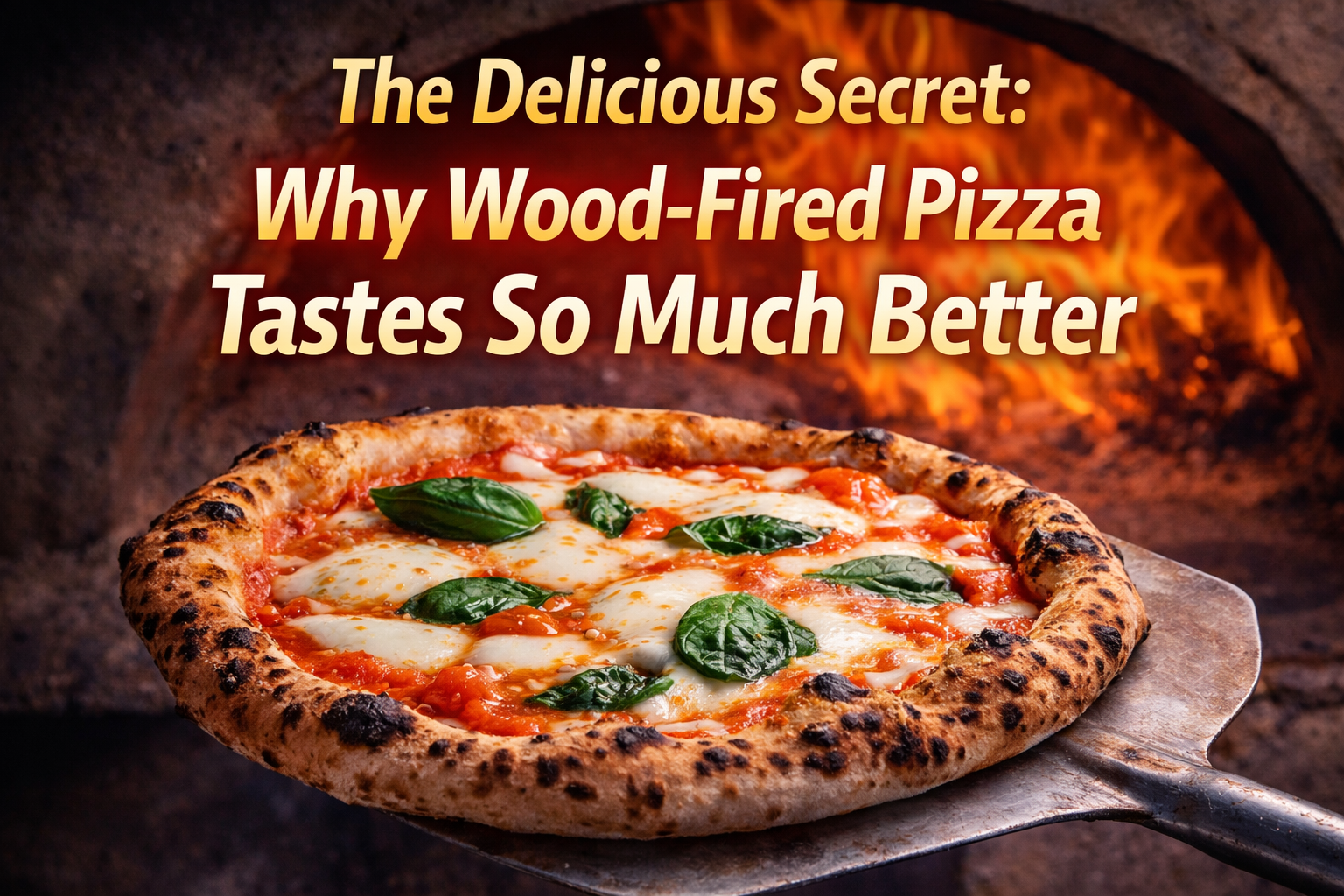
The Delicious Secret: Wood-fired pizza has long been celebrated as one of the most flavorful and authentic styles of pizza in the world. From rustic Italian kitchens to modern gourmet restaurants, people are drawn to the unique taste, texture, and aroma that only a wood-fired oven can produce. But what exactly makes wood-fired pizza taste so different—and so much better—than pizza baked in conventional ovens?
The answer lies in science. Heat transfer, combustion chemistry, moisture evaporation, and the Maillard reaction all play a role in transforming simple ingredients into a remarkable culinary experience. In this article, we’ll explore the science behind wood-fired pizza, why it delivers superior flavor and texture, and how traditional cooking methods continue to outperform modern alternatives.
Understanding the Basics of Wood-Fired Pizza

Before diving into the science, it’s important to understand what defines a wood-fired pizza.
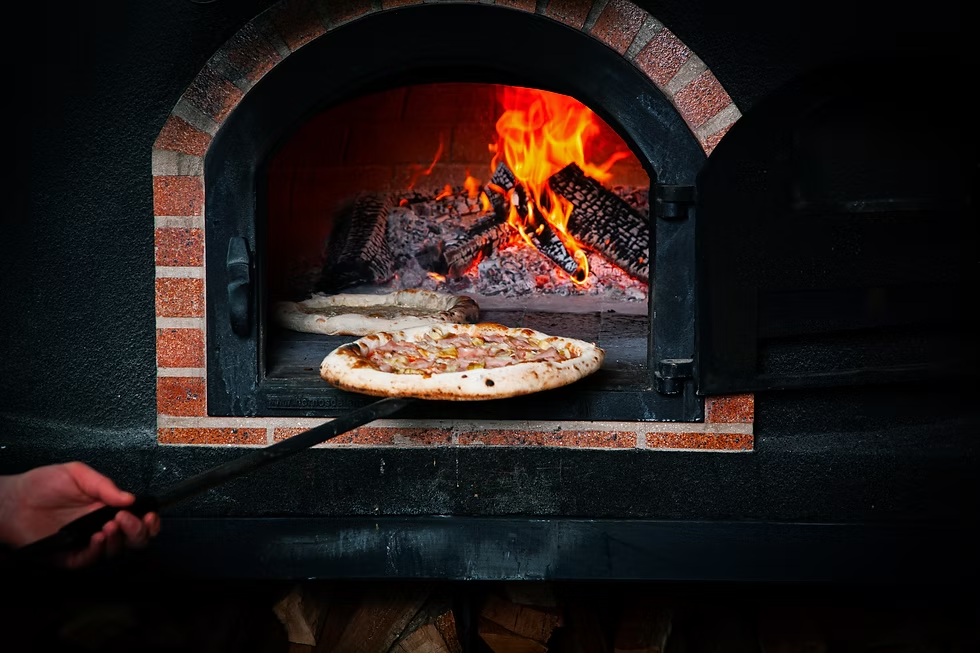
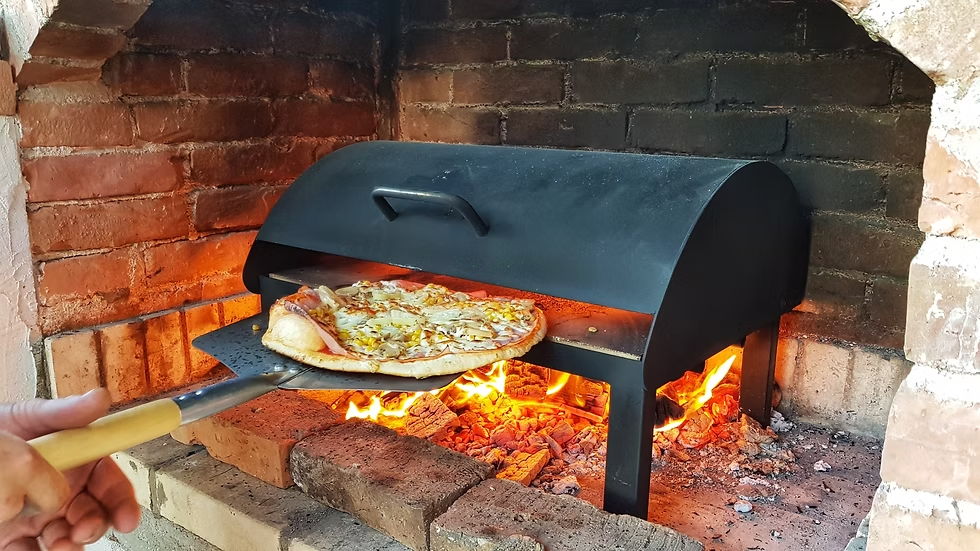
A wood-fired pizza is cooked inside a specialized oven that burns hardwood as its heat source. These ovens are typically dome-shaped and built from materials such as brick, stone, or clay. The fire inside the oven heats the walls and floor, allowing them to store intense thermal energy.
Unlike conventional ovens that cook food slowly at moderate temperatures, wood-fired ovens can reach temperatures between 700°F and 900°F (370°C – 480°C). At these extreme temperatures, pizza cooks in 60 to 90 seconds, dramatically changing the chemistry of the ingredients.

This rapid cooking process is one of the main reasons wood-fired pizza tastes so distinct.
The Role of Extreme Heat in Flavor Development
One of the most important scientific reasons behind wood-fired pizza’s taste is high heat intensity.
Rapid Cooking Locks in Moisture
When pizza dough and toppings are exposed to extreme heat, moisture evaporates quickly from the surface while the interior remains soft. This creates the perfect contrast between:
- A crispy exterior crust
- A light and airy interior

Because the pizza cooks so quickly, toppings like tomatoes, cheese, and vegetables retain more of their natural flavor.
Faster Chemical Reactions
High heat accelerates several chemical reactions responsible for flavor creation. These reactions develop:
- Complex caramelized flavors
- Nutty and roasted aromas
- Slight smoky undertones
These characteristics are difficult to achieve in standard electric or gas ovens.
The Maillard Reaction: The Secret to Perfect Crust
One of the most important scientific processes in cooking is called the Maillard reaction.
What Is the Maillard Reaction?
The Maillard reaction occurs when proteins and sugars combine under high heat, creating hundreds of new flavor compounds. This reaction is responsible for:
- The golden-brown crust of bread
- The sear on grilled steak
- The rich flavor of roasted coffee
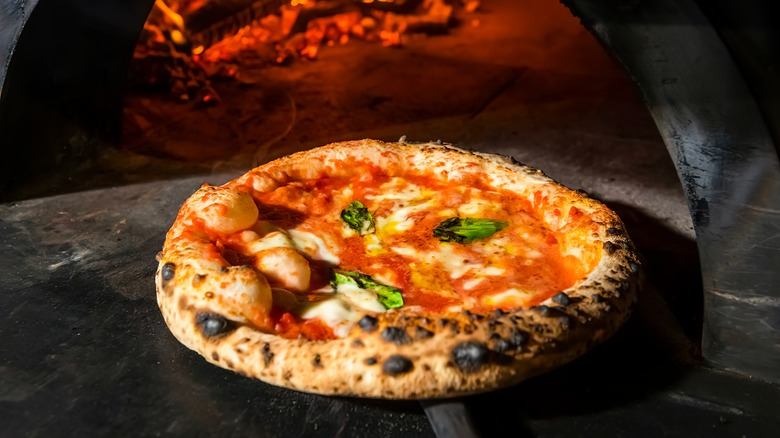
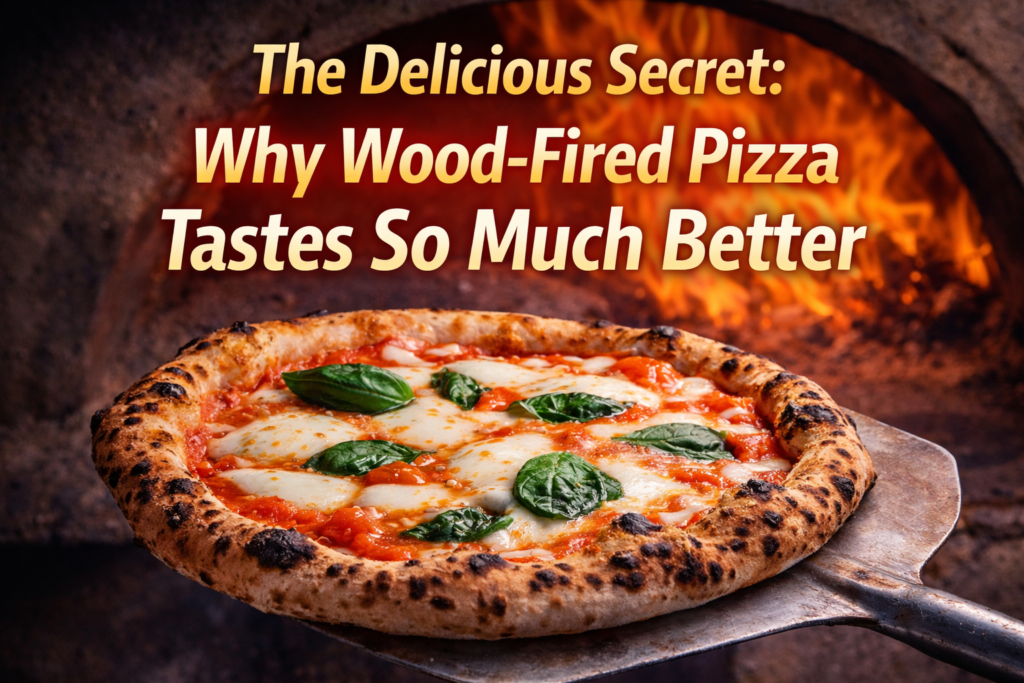
In pizza, the Maillard reaction produces the deeply browned bubbles and charred spots on the crust.
Why Wood-Fired Ovens Enhance This Reaction
Wood-fired ovens reach temperatures far higher than standard ovens. Because of this:
- Dough browns faster
- Flavor compounds form more quickly
- The crust develops complex textures and aromas
The result is the iconic leopard-spotted crust often seen on traditional pizza.
Combustion Chemistry: The Impact of Burning Wood
Another major factor in the taste of wood-fired pizza is the combustion process of burning wood.
Smoke and Flavor Compounds
When hardwood burns, it releases aromatic compounds including:
- Phenols
- Carbonyls
- Organic acids
These compounds mix with the hot air circulating inside the oven and lightly infuse the pizza with subtle smoky flavors.
This natural smokiness adds depth and complexity that electric ovens cannot replicate.
Different Woods Create Different Flavors
Various types of hardwood can influence the final taste of pizza.
Examples include:
Oak – balanced, classic smoke flavor
Maple – mild sweetness
Cherry wood – fruity undertones
Hickory – strong smoky aroma
Although the smoke flavor in pizza is subtle, it contributes to the overall sensory experience.
Radiant Heat vs Convection Heat
Another key scientific factor involves how heat moves inside the oven.
Traditional kitchen ovens mainly use convection heat, meaning hot air circulates around food.
Wood-fired ovens, however, use three types of heat simultaneously:
1. Radiant Heat
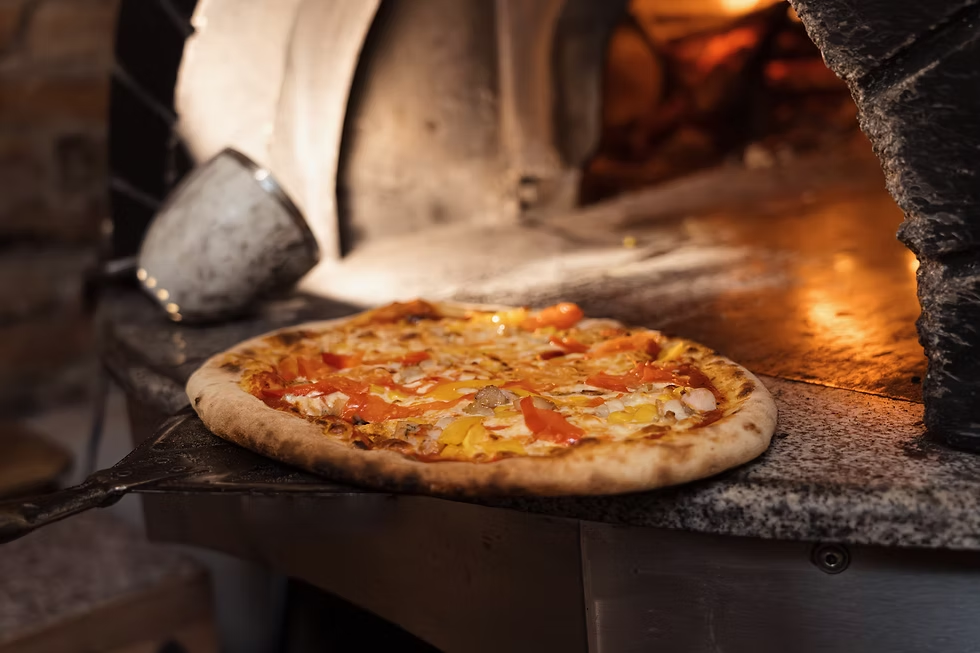
Radiant heat comes directly from the flames and hot oven walls. It cooks the top of the pizza rapidly, melting cheese and caramelizing toppings.
2. Conductive Heat
The stone floor of the oven transfers heat directly into the dough. This creates the crispy base of the pizza.
3. Convective Heat
Hot air inside the dome circulates and helps cook the pizza evenly.
The combination of these three heating methods produces a balanced cooking environment that conventional ovens cannot replicate.
Dough Fermentation and Flavor Chemistry
While the oven is crucial, the pizza dough itself also plays an important scientific role.
Fermentation Creates Flavor
Traditional wood-fired pizza dough is often fermented for 24 to 72 hours. During this time, yeast breaks down carbohydrates and produces:
- Carbon dioxide
- Organic acids
- Alcohols
These compounds create deeper flavor complexity in the dough.
Improved Digestibility
Long fermentation also breaks down gluten and starches, making the pizza easier to digest.
This is one reason why authentic wood-fired pizza often feels lighter than fast-food pizza.
Water Content and Dough Structure
Water plays a surprisingly important role in wood-fired pizza science.
High-hydration dough (usually 60–70% water) helps create:
- Larger air bubbles
- Soft interior crumb
- Crispy outer crust
When exposed to intense heat, water inside the dough turns to steam. This steam expands rapidly and forms the airy pockets seen in high-quality pizza crust.
Why Wood-Fired Pizza Has a Unique Texture
Texture is just as important as flavor when it comes to food satisfaction.
Wood-fired pizza creates a distinctive texture because of:
- Rapid crust expansion
- Quick caramelization
- Intense bottom heat
The result is a crust that is:
- Crisp on the outside
- Soft inside
- Slightly chewy
- Light and airy
This texture balance is extremely difficult to reproduce in lower-temperature ovens.
The Importance of Oven Design
The traditional dome-shaped wood oven is not just a historical design—it is scientifically efficient.
Heat Circulation
The dome shape allows heat to circulate evenly around the cooking chamber. Flames travel up the curved walls and spread heat across the entire oven.
Heat Retention
Brick and stone materials store large amounts of thermal energy. Once heated, they maintain stable temperatures for long periods.
This stability ensures consistent pizza quality.
Traditional Italian Influence on Wood-Fired Pizza
The popularity of wood-fired pizza can largely be traced back to Naples, Italy.
Traditional Neapolitan pizza follows strict guidelines including:
- Thin dough
- Minimal toppings
- High-temperature wood-fired ovens
- Cooking time under 90 seconds
These rules were developed over centuries through trial, error, and culinary craftsmanship.
What began as a local cooking method eventually became a global culinary standard.
Modern Science Confirms Traditional Techniques
Interestingly, many of the practices used by traditional pizza makers are now supported by modern food science.
Researchers studying cooking chemistry have confirmed that:
- High heat improves flavor reactions
- Wood smoke enhances aroma complexity
- Rapid baking preserves ingredient freshness
- Long fermentation improves digestibility
This means ancient cooking wisdom was often scientifically accurate long before modern laboratories could explain it.
Wood-Fired Pizza vs Conventional Oven Pizza
To better understand the science, it helps to compare the two cooking methods.
Temperature Differences
Wood-fired ovens: 700–900°F
Conventional ovens: 450–550°F
Higher heat leads to faster cooking and stronger flavor reactions.
Cooking Time
Wood-fired pizza: 60–90 seconds
Conventional pizza: 10–15 minutes
Longer cooking times can dry out ingredients and reduce freshness.
Flavor Complexity
Wood-fired pizza benefits from:
- Smoke compounds
- Faster caramelization
- Better moisture retention
These factors combine to create a richer flavor profile.
The Psychology of Taste
Taste is not only about chemistry—it’s also about perception.
Several psychological factors make wood-fired pizza feel more satisfying.
Visual Appeal
The charred bubbles and rustic crust signal quality and authenticity.
Aroma
Smoky aromas trigger appetite and enhance flavor perception.
Experience
Watching pizza cooked in an open flame environment adds excitement and anticipation.
Together, these factors enhance the overall eating experience.
The Future of Wood-Fired Cooking
As interest in artisanal food continues to grow, wood-fired cooking is becoming more popular worldwide.
Many modern restaurants now feature:
- Outdoor pizza ovens
- Artisan dough fermentation
- Locally sourced ingredients
- Traditional cooking methods
At the same time, engineers are designing improved wood-fired ovens that maintain efficiency while reducing emissions.
This blend of tradition and innovation ensures that wood-fired pizza will remain a culinary favorite for generations.
Conclusion
The remarkable taste of wood-fired pizza is not just a matter of tradition—it is deeply rooted in science. From the Maillard reaction and combustion chemistry to heat transfer and dough fermentation, many complex processes combine to produce its unforgettable flavor.
High temperatures accelerate flavor-forming reactions, wood smoke introduces aromatic compounds, and rapid cooking preserves ingredient freshness. Meanwhile, fermentation and hydration improve dough structure and digestibility.
Together, these scientific factors explain why wood-fired pizza consistently delivers a superior taste and texture compared to conventional pizza.
In the end, what might seem like a simple meal is actually the result of centuries of culinary knowledge supported by modern scientific understanding.
Wood-fired pizza is not just food—it is a perfect intersection of science, tradition, and flavor.
FAQs
1. Why does wood-fired pizza taste different from regular pizza?
Wood-fired pizza tastes different because it cooks at extremely high temperatures—often between 700°F and 900°F. This intense heat quickly caramelizes the dough and toppings while creating a slightly smoky flavor from the burning wood. The result is a pizza with richer flavor, crisp texture, and a light, airy crust.
2. What makes wood-fired pizza crust unique?
The crust of wood-fired pizza becomes crispy on the outside and soft inside because of rapid heat exposure. High temperatures cause the dough to rise quickly and form air pockets, while the bottom cooks on a hot stone surface that produces a crunchy base.
3. What is the Maillard reaction in pizza cooking?
The Maillard reaction is a chemical process that occurs when sugars and proteins react under high heat. In wood-fired pizza, this reaction creates the golden-brown color, charred spots, and complex flavors in the crust.