
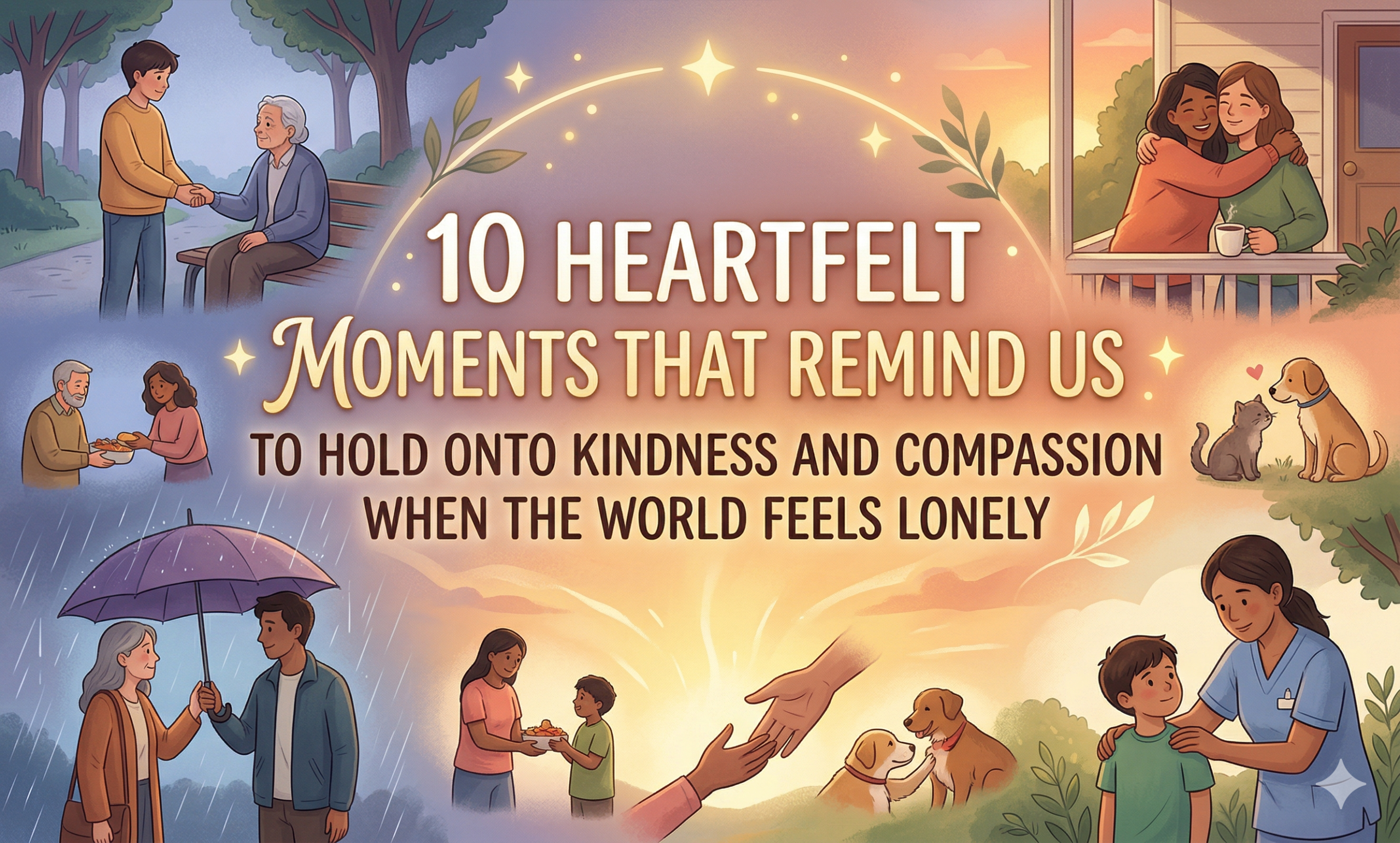
Introduction: Finding Humanity in a Lonely World
10 Heartfelt Moments: In today’s fast-moving and digitally connected world, many people paradoxically feel more isolated than ever before. Social media, busy schedules, and personal struggles can sometimes create emotional distance between people, leaving individuals feeling unseen or unheard.
Yet even during the most difficult moments, acts of kindness and compassion continue to shine through. Small gestures—often quiet and unnoticed—can restore hope and remind us that humanity still cares.

Psychologists often emphasize that compassion plays a critical role in emotional well-being. Research supported by the World Health Organization highlights how social connection and empathy can help reduce loneliness, anxiety, and depression.

This article explores 10 powerful moments that remind us why kindness and compassion matter, especially when the world feels cold or lonely
Why Kindness Matters More Than Ever
The Growing Challenge of Loneliness
Loneliness has become one of the most discussed social issues of modern times. Studies from organizations such as the Harvard University have shown that strong social connections are one of the most important predictors of happiness and long-term health.

However, in many societies, people experience:
- Social isolation
- Workplace stress
- Emotional burnout
- Reduced community engagement
When individuals feel disconnected, even a simple act of kindness can have a powerful emotional impact.
The Emotional Power of Compassion
How Kindness Affects the Brain
Kindness is not just a moral value—it also has measurable biological effects.

Research from the Stanford University suggests that acts of compassion can trigger the release of chemicals such as dopamine and oxytocin, which are associated with happiness and trust.
This means that when people show kindness, both the giver and the receiver often experience emotional benefits.
10 Moments That Remind Us to Hold Onto Kindness
1. A Stranger Helping Someone on a Difficult Day
Imagine someone standing alone at a train station after receiving bad news. Their day feels overwhelming.
A stranger notices their distress and simply asks, “Are you okay?”
That small moment of empathy can remind someone that they are not invisible.
2. A Teacher Who Believes in a Student
Sometimes one encouraging voice can change a life.
A teacher who tells a struggling student, “I believe in you,” can spark confidence that lasts for years.
Many successful individuals credit mentors and teachers for believing in them during their hardest moments.
3. A Neighbor Who Offers Support
Community kindness often appears in simple ways.
When a neighbor helps carry groceries, shovels snow, or checks in during difficult times, they reinforce a sense of belonging that many people desperately need.
4. A Friend Who Listens Without Judgment
One of the most powerful forms of kindness is listening.
When someone is going through emotional pain, they may not need advice—they simply need someone to hear them without criticism.
That kind of compassion builds trust and emotional healing.
5. A Small Act of Generosity
Kindness sometimes appears in unexpected forms.
Someone paying for another person’s meal or helping a stranger in need can restore faith in humanity.
These moments remind us that generosity still exists in everyday life.
6. A Message That Arrives at the Perfect Time
A simple message—“I’m thinking about you”—can arrive exactly when someone needs encouragement.
Even short expressions of care can brighten someone’s day.
7. Helping Someone Who Feels Invisible
Many people quietly struggle with loneliness.
A coworker inviting someone to lunch or including them in a conversation can help them feel seen and valued.
Inclusion is a powerful form of compassion.
8. Comfort During a Difficult Loss
Grief can make people feel isolated.
When friends, family, or even acquaintances offer comfort during a loss, they help carry part of that emotional burden.
Compassion during difficult times often leaves a lifelong impression.
9. Encouragement During Failure
Failure can feel overwhelming, especially when someone believes they have disappointed others.
A supportive voice saying “You can try again” can transform discouragement into determination.
Encouragement is one of the most valuable forms of kindness.
10. A Community Coming Together
Sometimes kindness becomes visible on a larger scale.
Communities often unite to help people facing hardship—whether through fundraising, volunteer work, or emotional support.
These collective acts of compassion demonstrate the strength of human solidarity.
Why Small Acts Matter So Much
Many people assume kindness must involve large sacrifices or dramatic gestures.
In reality, the smallest actions often have the greatest emotional impact.
Simple acts like:
- Smiling at someone
- Holding a door open
- Offering encouragement
- Expressing gratitude
can make someone feel valued and appreciated.
The Ripple Effect of Compassion
Kindness has a powerful ripple effect.
When someone receives compassion, they are more likely to extend kindness to others.
Psychologists describe this as prosocial behavior, where positive actions inspire more positive actions.
Over time, these small interactions can create more supportive communities.
The Role of Empathy in Human Connection
Empathy is the ability to understand and share another person’s feelings.
When people practice empathy, they build stronger relationships and healthier communities.
Empathy encourages people to:
- Listen more carefully
- Show patience
- Offer support during difficult times
In many ways, empathy is the foundation of compassion.
Teaching Kindness in Everyday Life
Kindness can be practiced and strengthened like any other skill.
People can develop compassion by:
- Paying attention to others’ emotions
- Offering help when possible
- Expressing appreciation
- Being patient during conflicts
Teaching kindness in schools, workplaces, and communities can help create more supportive environments.
Why Compassion Is Essential in Difficult Times
During periods of global uncertainty—economic challenges, social change, or personal hardships—compassion becomes even more important.
Kindness reminds people that despite difficulties, humanity still has the capacity to care for one another.
Acts of compassion often restore hope when people need it most.
The Long-Term Impact of Kindness
Research suggests that people who regularly practice kindness often experience:
- Greater life satisfaction
- Stronger social relationships
- Improved mental health
Kindness also strengthens communities by encouraging cooperation and trust.
How We Can All Keep Kindness Alive
Maintaining compassion in a challenging world requires intentional effort.
Some simple ways to keep kindness alive include:
- Checking in on friends and family
- Supporting people who are struggling
- Showing appreciation for others
- Practicing patience and understanding
Even small acts can create meaningful connections.
Conclusion: Kindness Is a Light in Lonely Times
Loneliness can sometimes make the world feel cold and distant.
But moments of compassion remind us that kindness still exists in everyday life.
Whether it’s a supportive message, a listening ear, or a helping hand, these small gestures can brighten someone’s darkest day.
In a world that can sometimes feel disconnected, choosing kindness is one of the most powerful ways to restore hope and human connection.
The truth is simple: when we hold onto compassion, we help make the world a little less lonely for everyone.
FAQs
1. Why is kindness important when the world feels lonely?
Kindness becomes even more important during lonely or difficult times because it reminds people that they are not alone. Simple acts of compassion—like listening, helping, or encouraging someone—can create meaningful human connections and restore hope in challenging moments.
2. How can small acts of kindness make a difference?
Small acts of kindness can have a powerful ripple effect. When someone experiences compassion, they are more likely to pass it on to others. Simple gestures such as offering a smile, helping a stranger, or checking in on a friend can significantly improve someone’s emotional well-being.
3. Why do people feel lonely in today’s world?
Many people feel lonely due to busy lifestyles, social media comparisons, lack of meaningful connections, or life transitions. Despite being digitally connected, many individuals struggle to find genuine emotional support and understanding.